
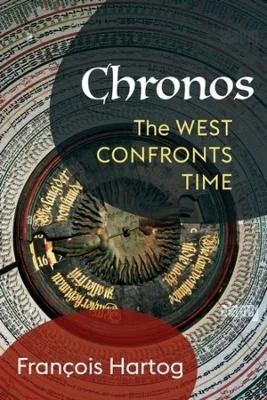
Description
By (author) Hartog, François; Translated by Ross Gilbert, Samuel
Short /annotation
In Chronos, a leading French historian ranges from Western antiquity to the Anthropocene, pinpointing the crucial turning points in our relationship to time. François Hartog considers the genealogy of Western temporalities, examining the order of times and the divisions of time into epochs.
As omnipresent as it is ungraspable, time has always inspired and eluded attempts to comprehend it. For the early Christians, for the twenty-first-century world, how have past and future been woven into the present? In Chronos, a leading French historian ranges from Western antiquity to the Anthropocene, pinpointing the crucial turning points in our relationship to time.
François Hartog considers the genealogy of Western temporalities, examining the orders of time and their divisions into epochs. Beginning with how the ancient Greeks understood time, Chronos explores the fashioning of a Christian time in the early centuries of the Catholic Church. Christianity’s hegemony over time reigned over Europe and beyond, only to ebb as modern time—presided over by the notion of relentless progress—set out on its march toward the future. Hartog emphasizes the deep uncertainties the world now faces as we reckon with the arrival and significance of the Anthropocene age. Humanity has become capable of altering the climate, triggering in mere life spans changes that once took place across geological epochs. In this threatening new age, which has challenged all existing temporal constructions, what will become of the old ways of understanding time?
Intertwining reflections on intellectual history and historiography with critiques of contemporary presentism and apocalypticism, Chronos brings depth and erudition to debates over the nature of the era we are living through and offers keen insight into the experience of historical time.
Table of contents
To Readers of the English Edition
Preface: The Undeducible Present
Introduction: From the Greeks to the Christians
1. The Christian Regime of Historicity: Chronos Between Kairos and Krisis
2. The Christian Order of Time and Its Spread
3. Negotiating with Chronos
4. Dissonance and Fissures
5. In the Thrall of Chronos
6. Chronos Destituted, Chronos Restored
Conclusion: The Anthropocene and History
Notes
Index
Review quote
With characteristic elegance, wit, and erudition, Hartog, the master thinker of historical time, offers a panoramic view of the past to show how a temporal order (re)fashioned by Christianity endures to this day and shapes our crisis-ridden sense of the present. This is a longue-durée perspective on the Anthropocene that only someone with Hartog”s learning and brilliance could have provided. An indispensable guide to the present.
Review quote
Chronos is a magisterial book, breathtaking in scope and precision. I cannot think of another historian who could have written this book in this way. François Hartog uniquely possesses the intellectual expertise and range to lead the reader through a sweeping history of the concept of time in the “West,” beginning with the Greeks in antiquity and ending with our current periodization of the Anthropocene. It is an important work on one of the most pressing topics of our day.
Review quote
This book, masterfully translated by S. R. Gilbert, will undoubtedly become a classic. A Christian “revolution in time” led from Greek Chronos, to Augustine’s self, to modern change, and to the Anthropocene. Beautifully written, this is a book for everyone who wants to know why our time is what it is.
Review quote
In this brilliant, original, and profound book, François Hartog takes further his critical analyses of the sources and legacies of m
Reviews
There are no reviews yet.